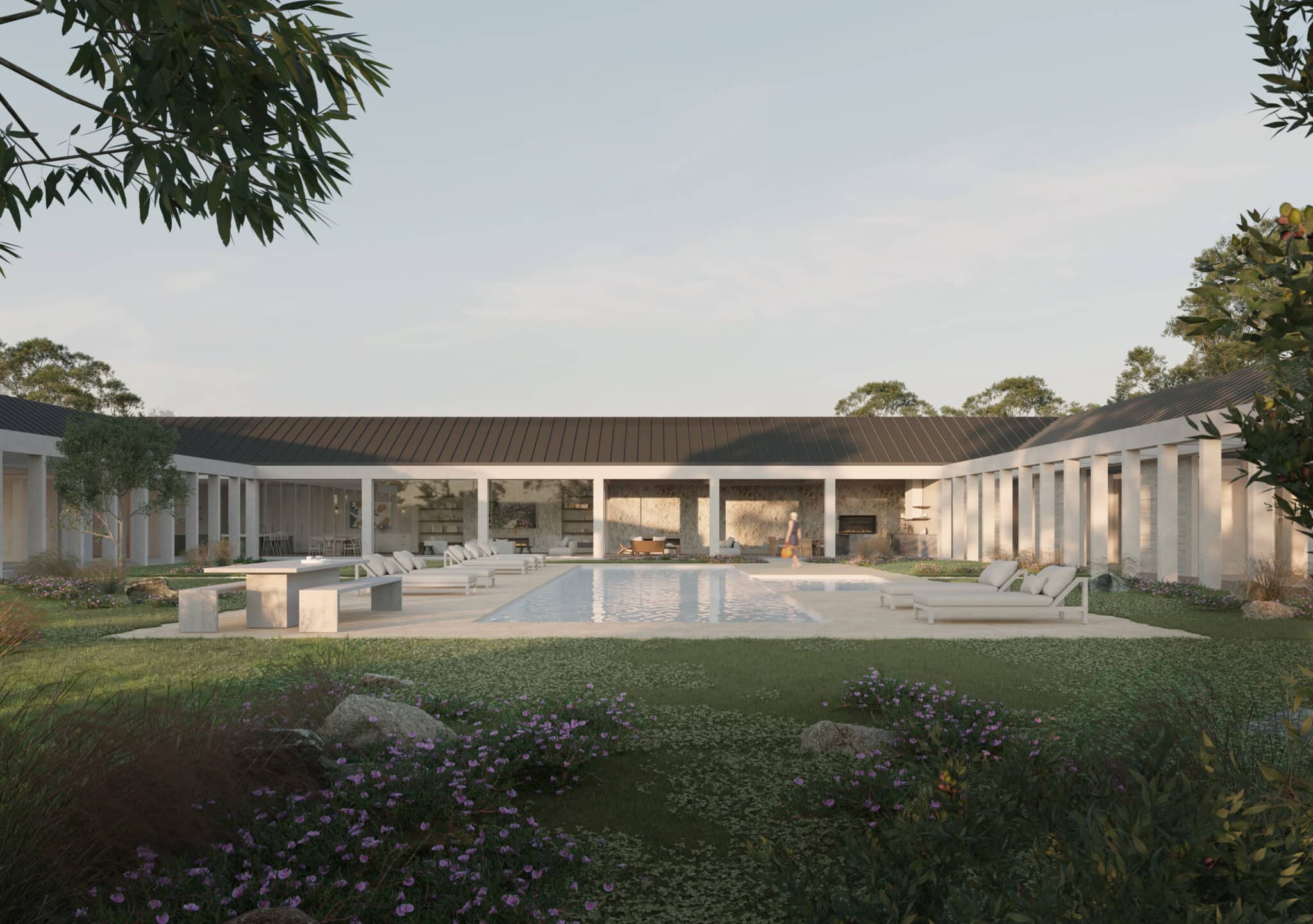
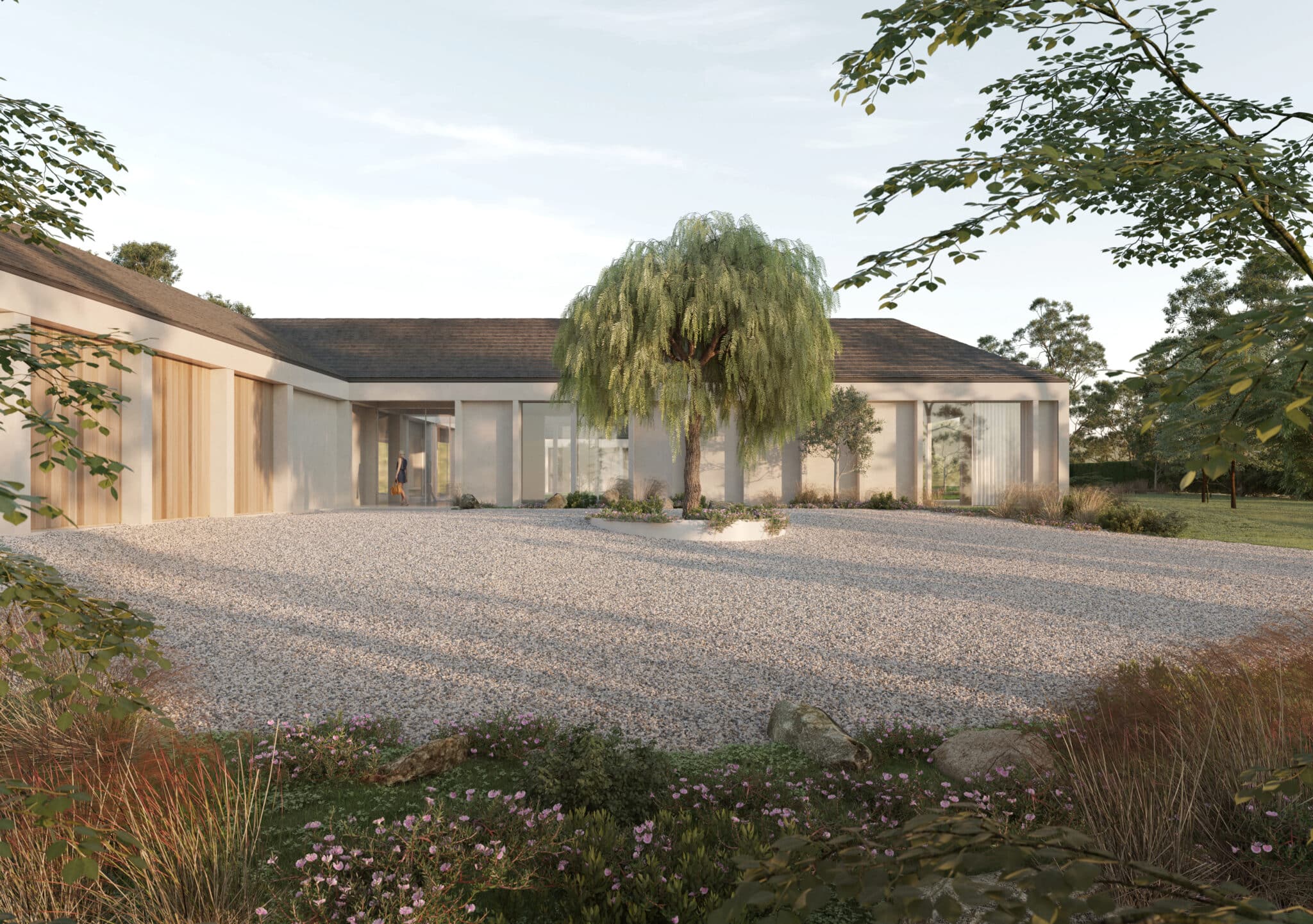
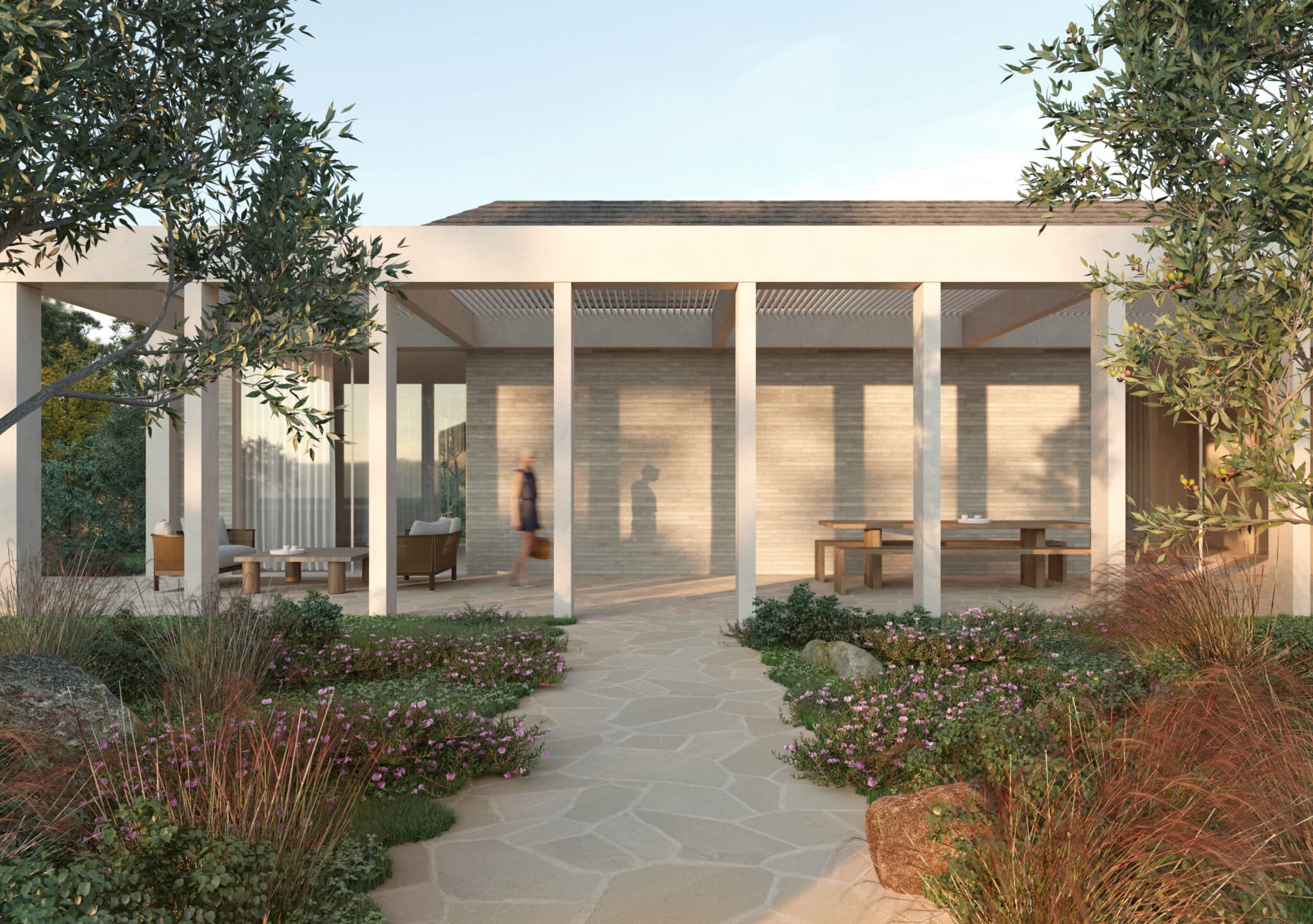
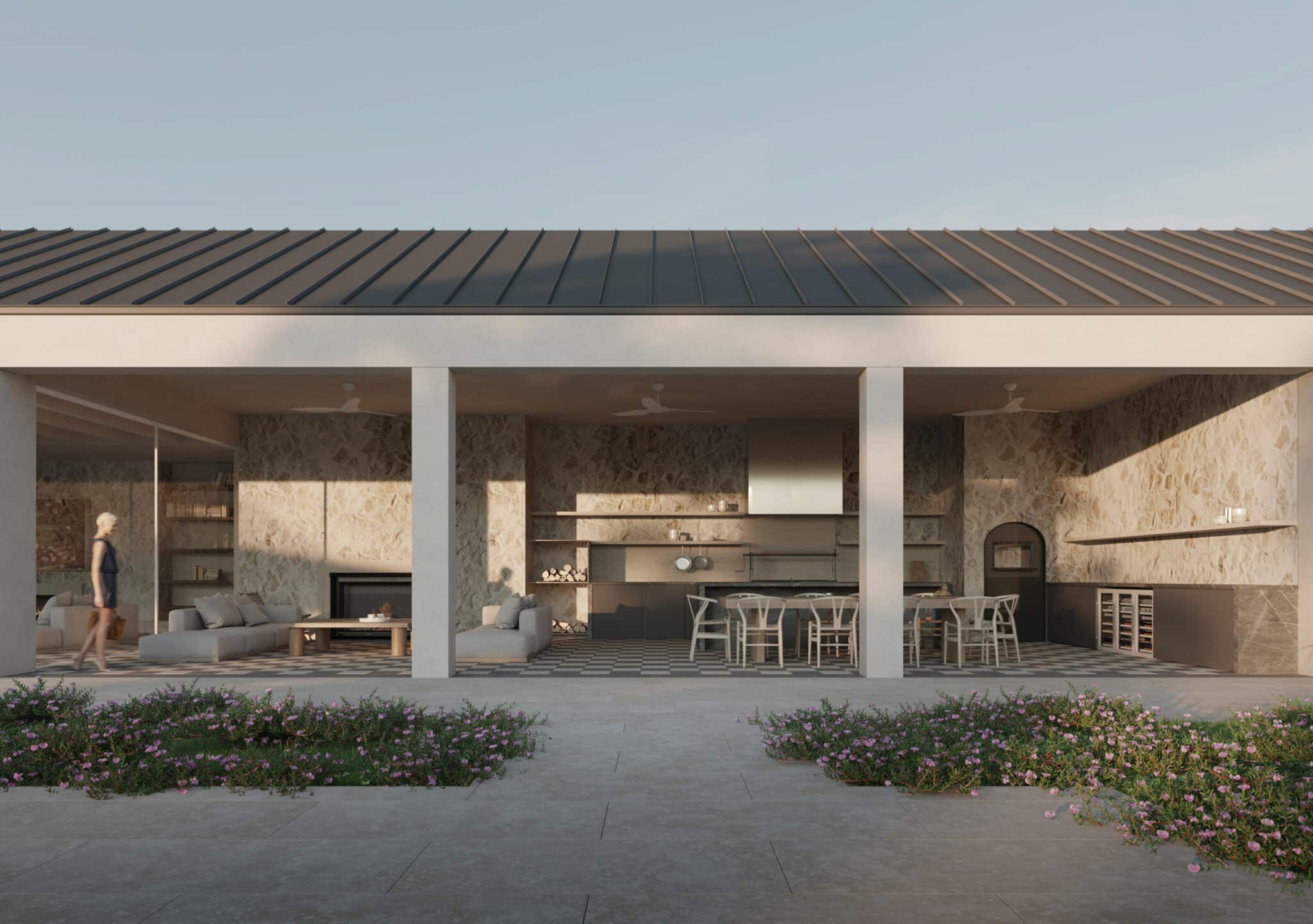
Portsea House II is conceived as a singular, continuous building that gently extends across the site, forming a series of connected wings arranged around a central courtyard. The architecture maintains a strong sense of unity, with each wing linked under a consistent roofline and expressed through a restrained, cohesive material palette.
The planning is organised to balance openness and enclosure. A central courtyard anchors the home, providing light, outlook, and a shared focus for daily life. From this space, the house unfolds into distinct zones for living, entertaining, and retreat, allowing for both connection and privacy within a clear and legible plan.
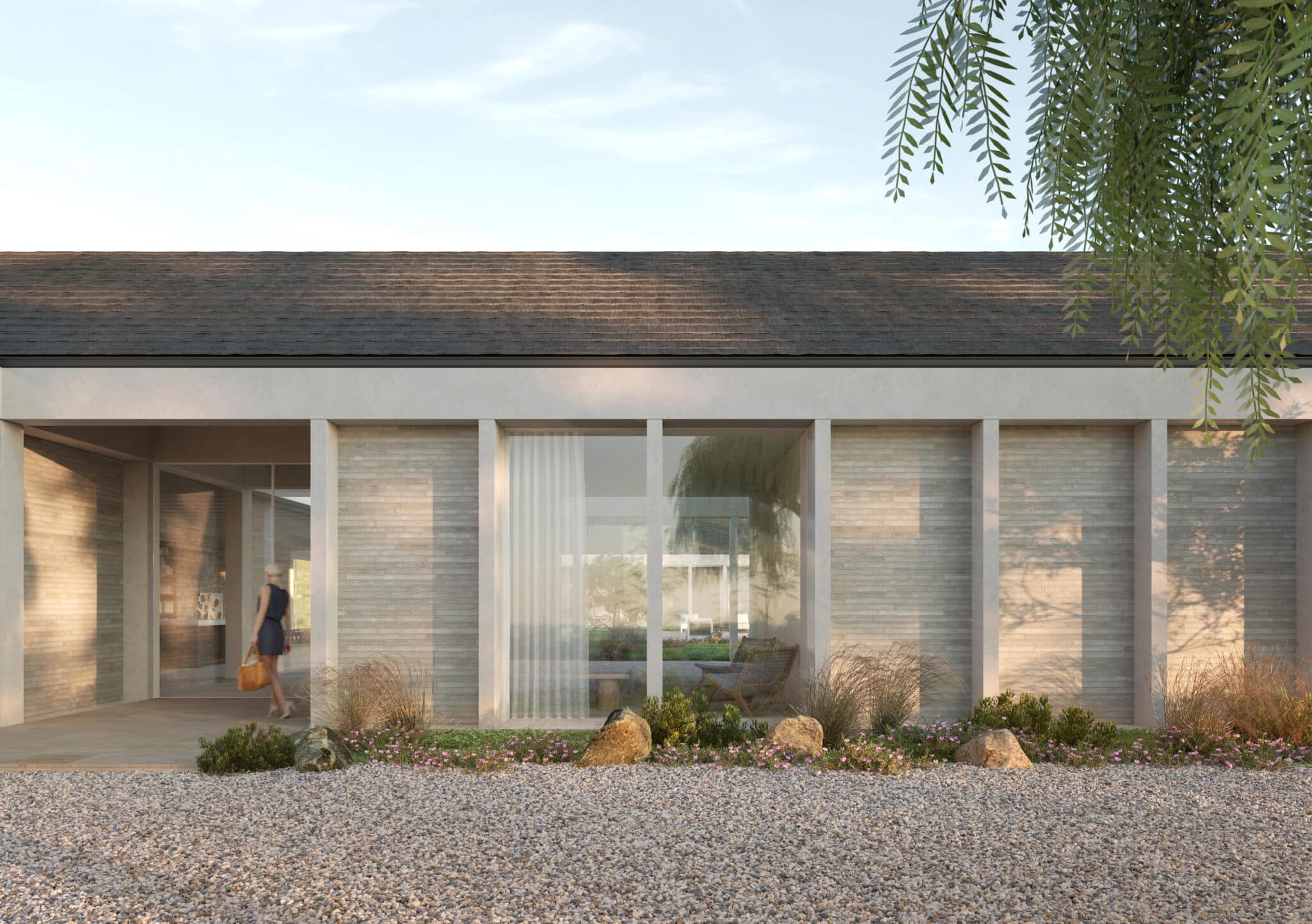
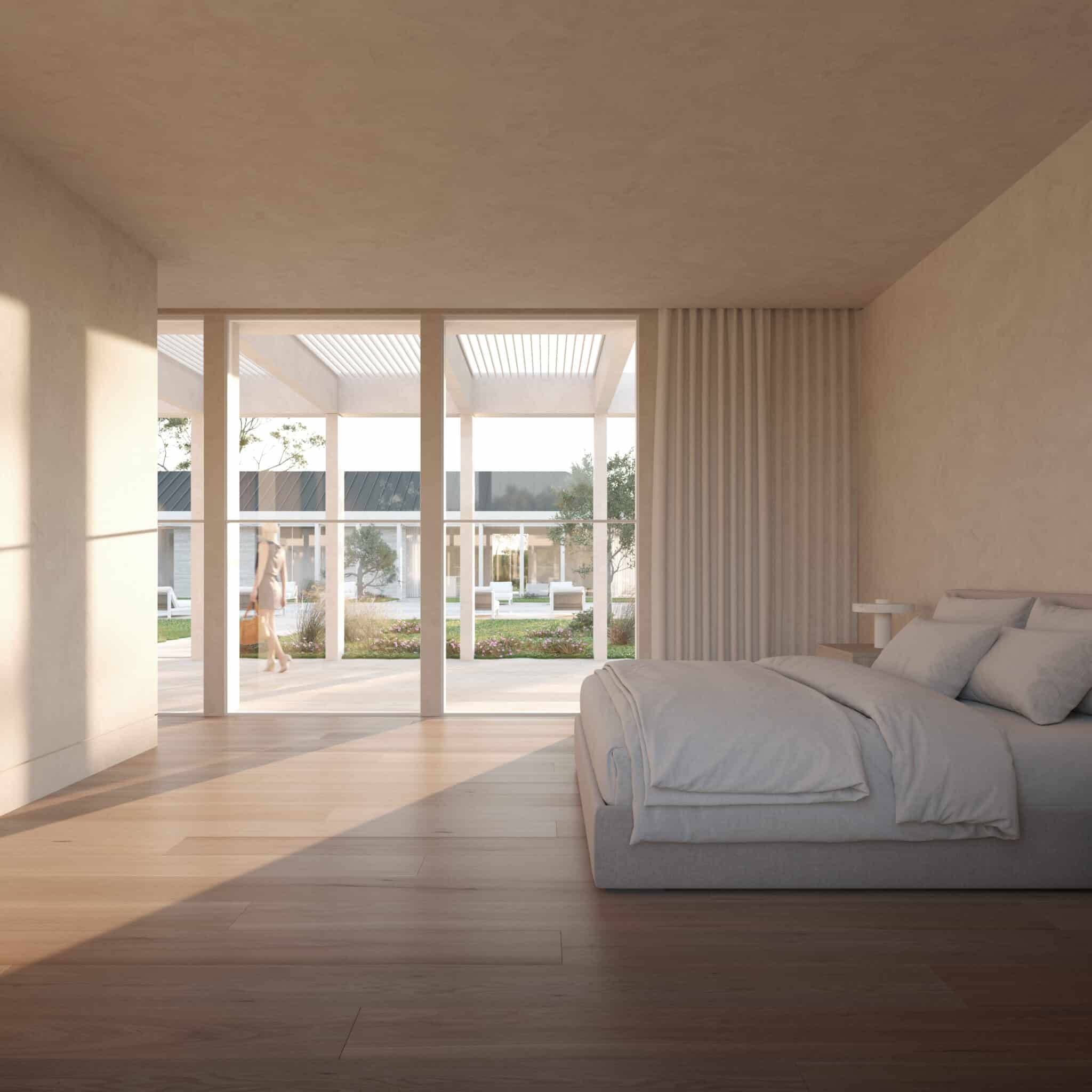
A continuous colonnade defines the inner edge of the building, creating a sheltered threshold between interior and landscape. This layer softens the transition between inside and out, offering shade, rhythm, and a consistent architectural language that ties the wings together. Movement through the home is intuitive, with views oriented back to the courtyard or outward to the surrounding garden.
Materially, the house is defined by enduring, robust elements. Masonry, stone, and concrete are used throughout, giving the building a sense of permanence and resilience suited to its coastal environment. The palette is deliberately muted and textural, allowing light and shadow to bring subtle variation across the surfaces over time.
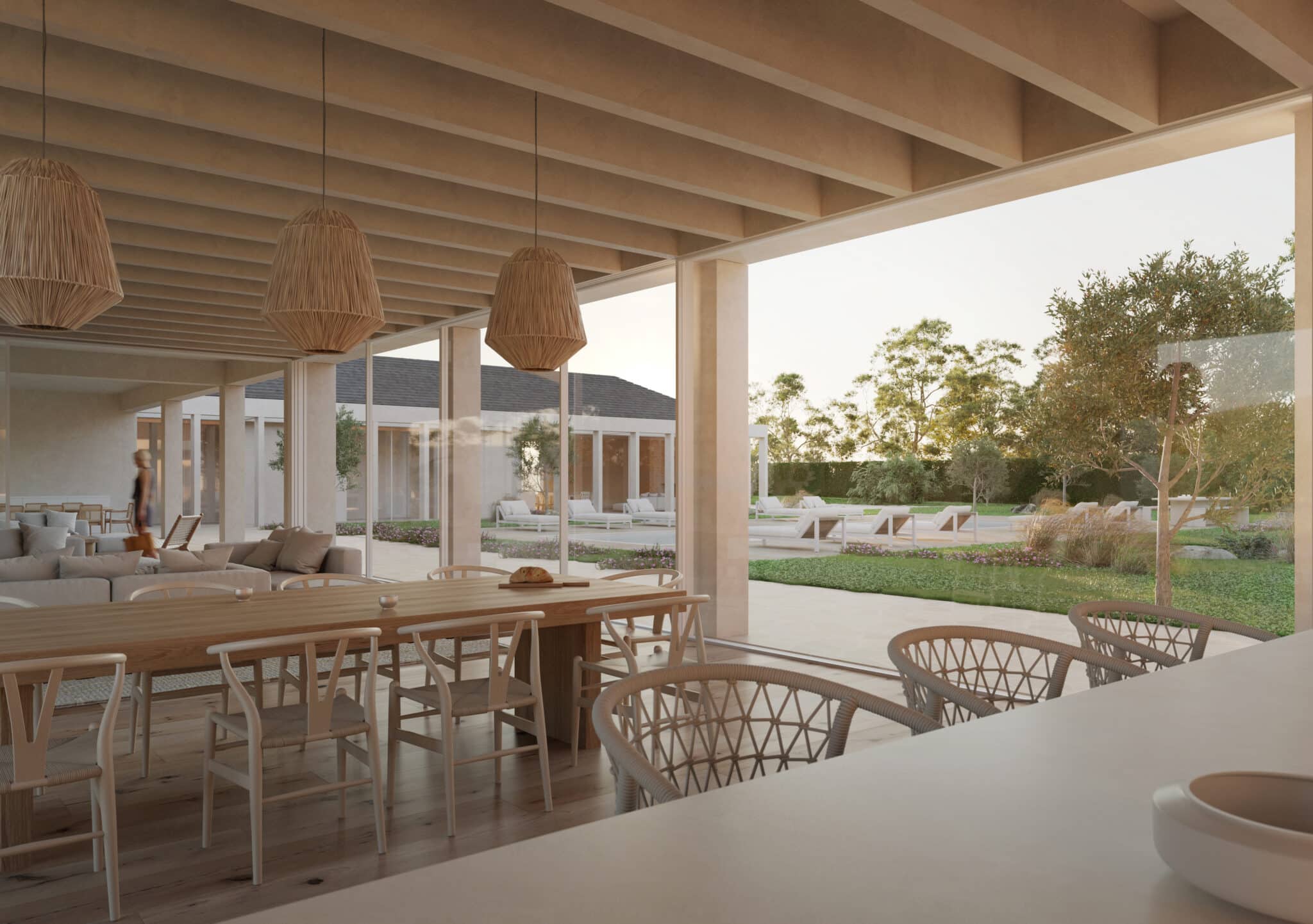
Internally, spaces are generous and understated. Living areas open directly to the courtyard and pool, supporting a relaxed, coastal way of living. More private rooms are positioned along the quieter edges of the plan, maintaining connection to landscape while offering retreat.
Portsea House II is defined by clarity and continuity. It is a home that reads as one cohesive form, carefully articulated to support a layered and flexible living experience grounded in its setting and built for longevity.