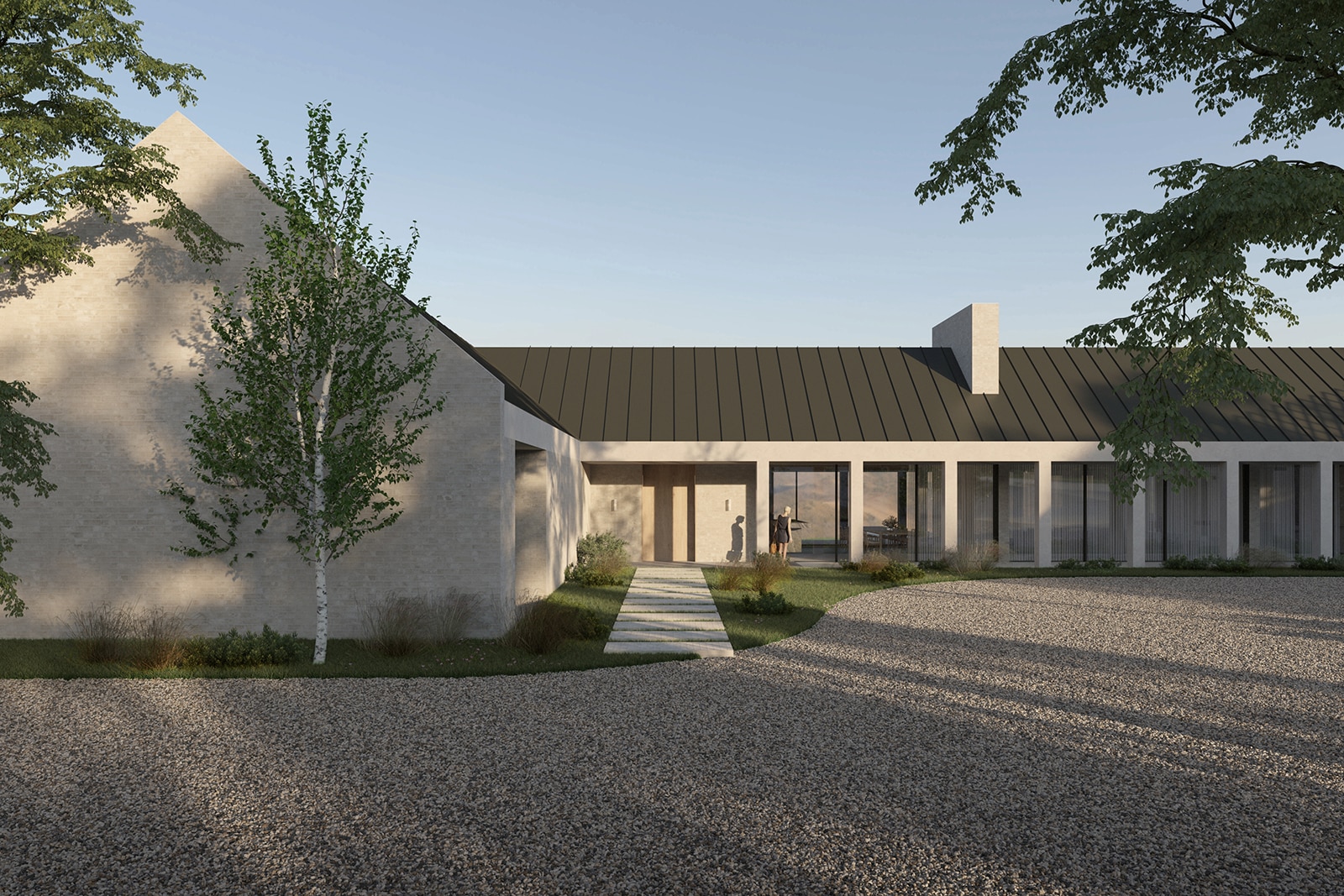
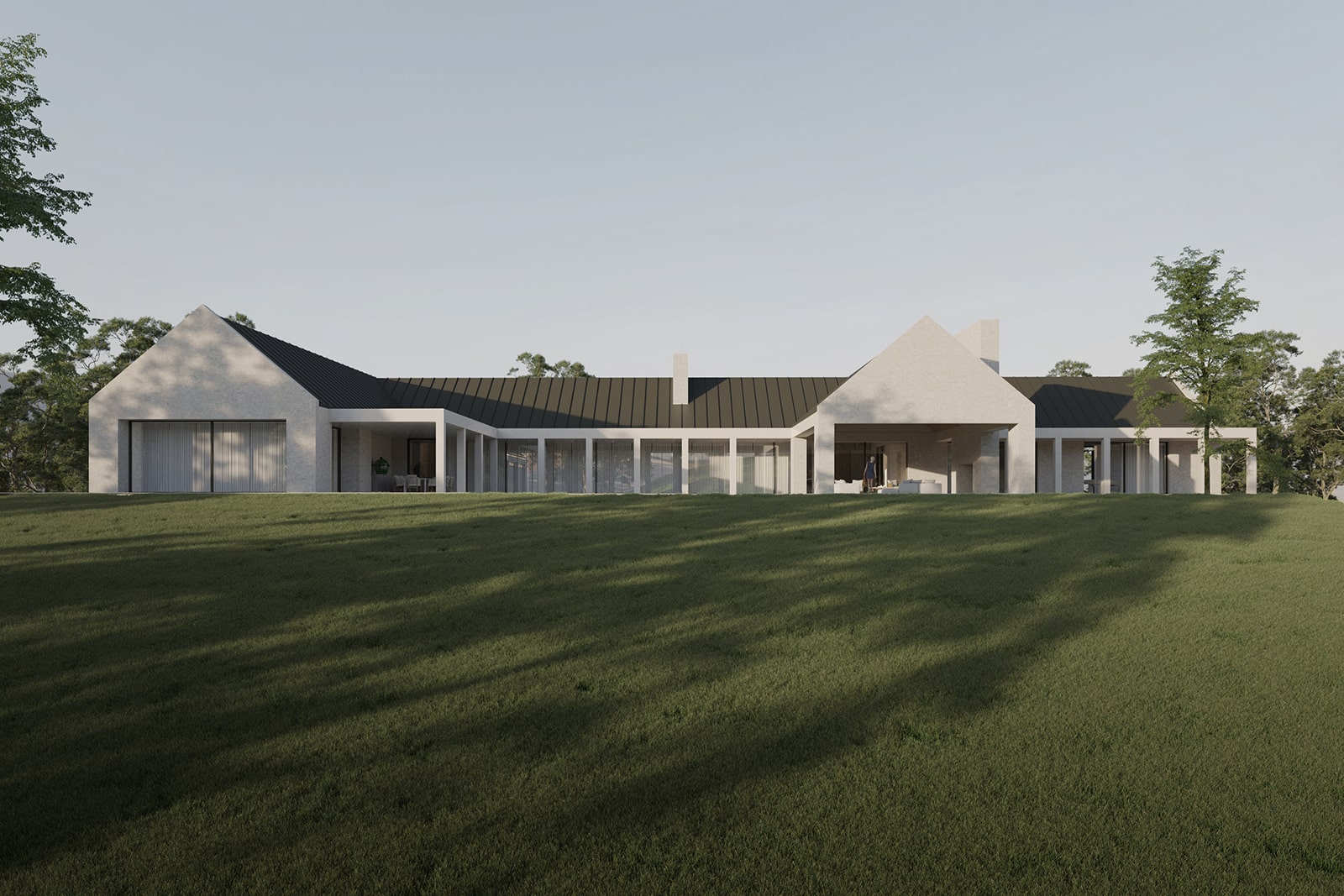
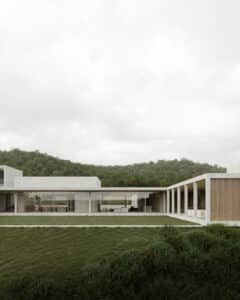
Belgrave South House is conceived as a single, continuous form set lightly across a sloping, treed landscape. Defined by a series of interconnected gabled volumes, the house reads as one cohesive building, its wings extending to accommodate program while maintaining a unified architectural expression.
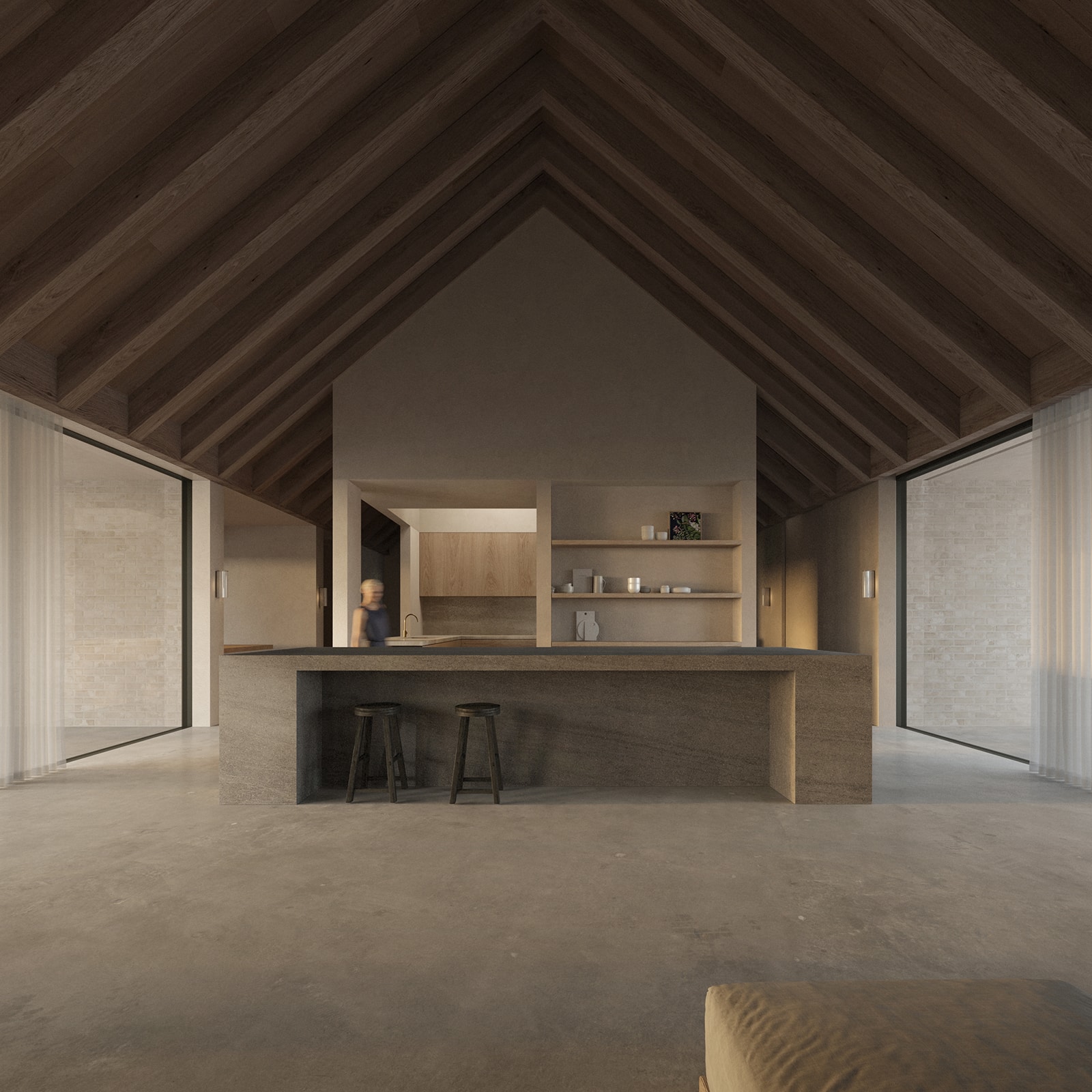
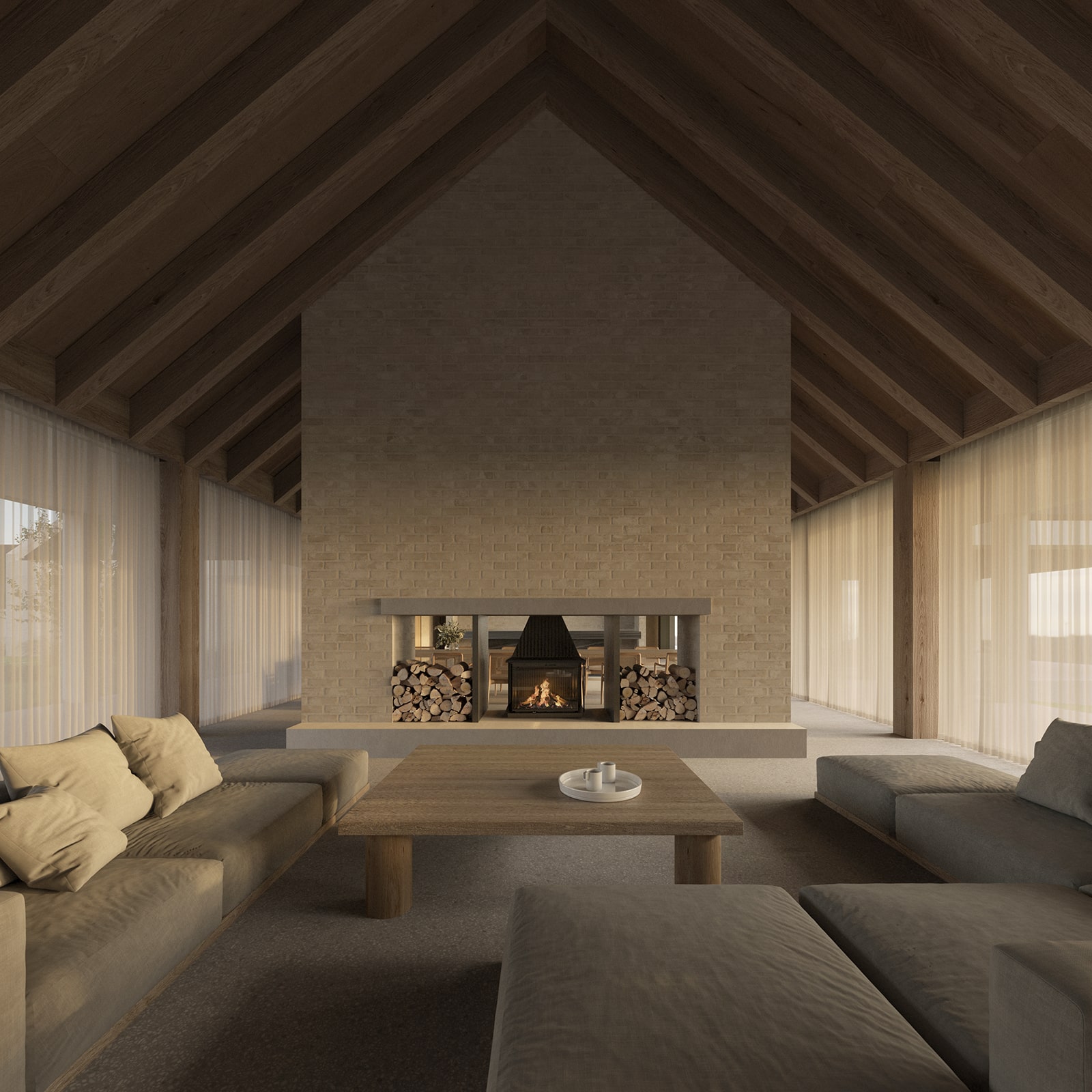
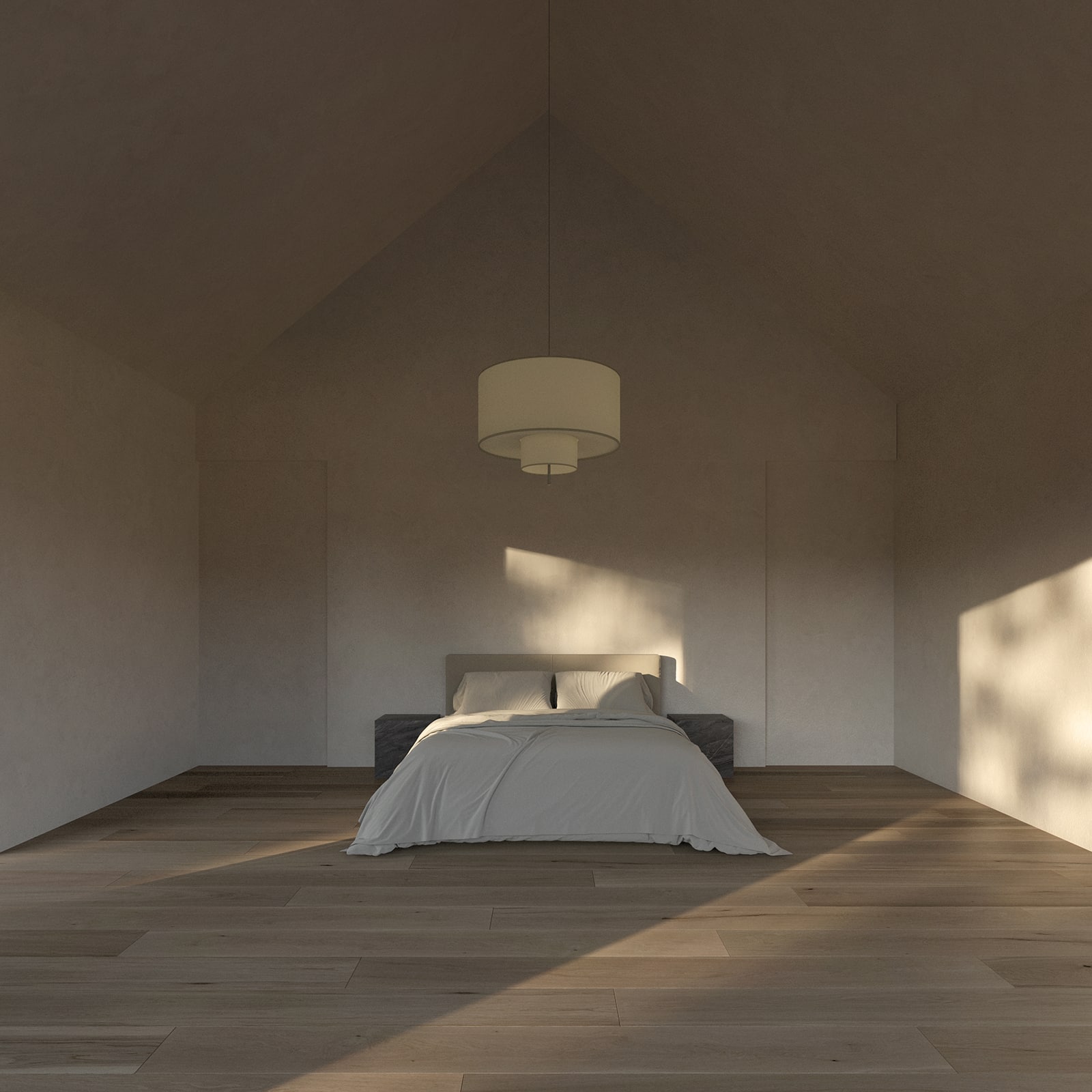
The planning is organised around a central living spine, where a generous, vaulted volume anchors the home. This space acts as the social heart, opening seamlessly to the garden and covered outdoor areas, allowing daily life to extend outward into the landscape. Flanking wings contain private and secondary spaces, creating a clear gradient from shared to intimate while remaining physically and visually connected.
A continuous colonnaded edge mediates between inside and out. This deep threshold provides shelter and shade, softening the building’s interface with the landscape and establishing a rhythm that unifies the composition. Movement along this edge reinforces a constant connection to the garden, framing views and capturing changing light throughout the day.
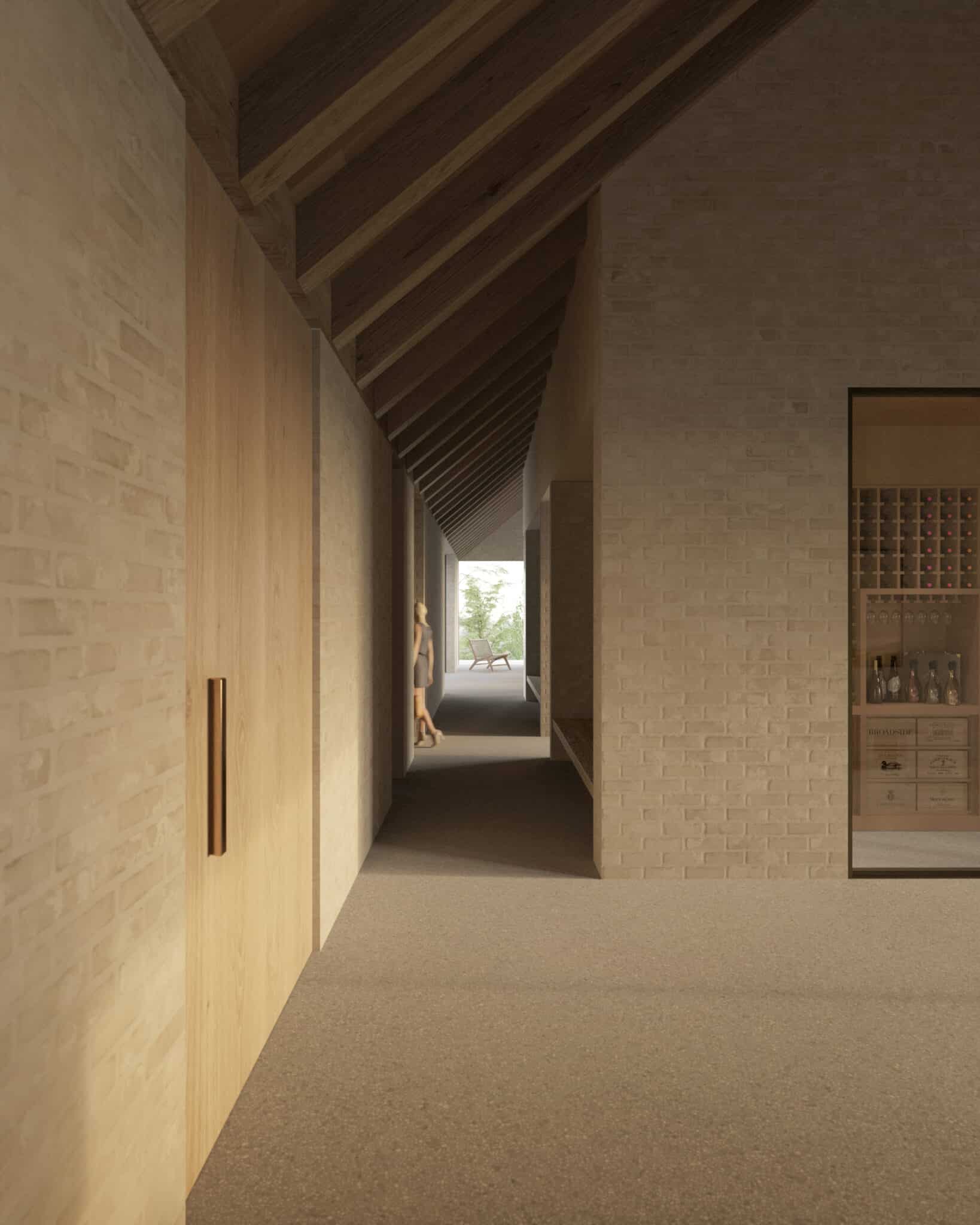
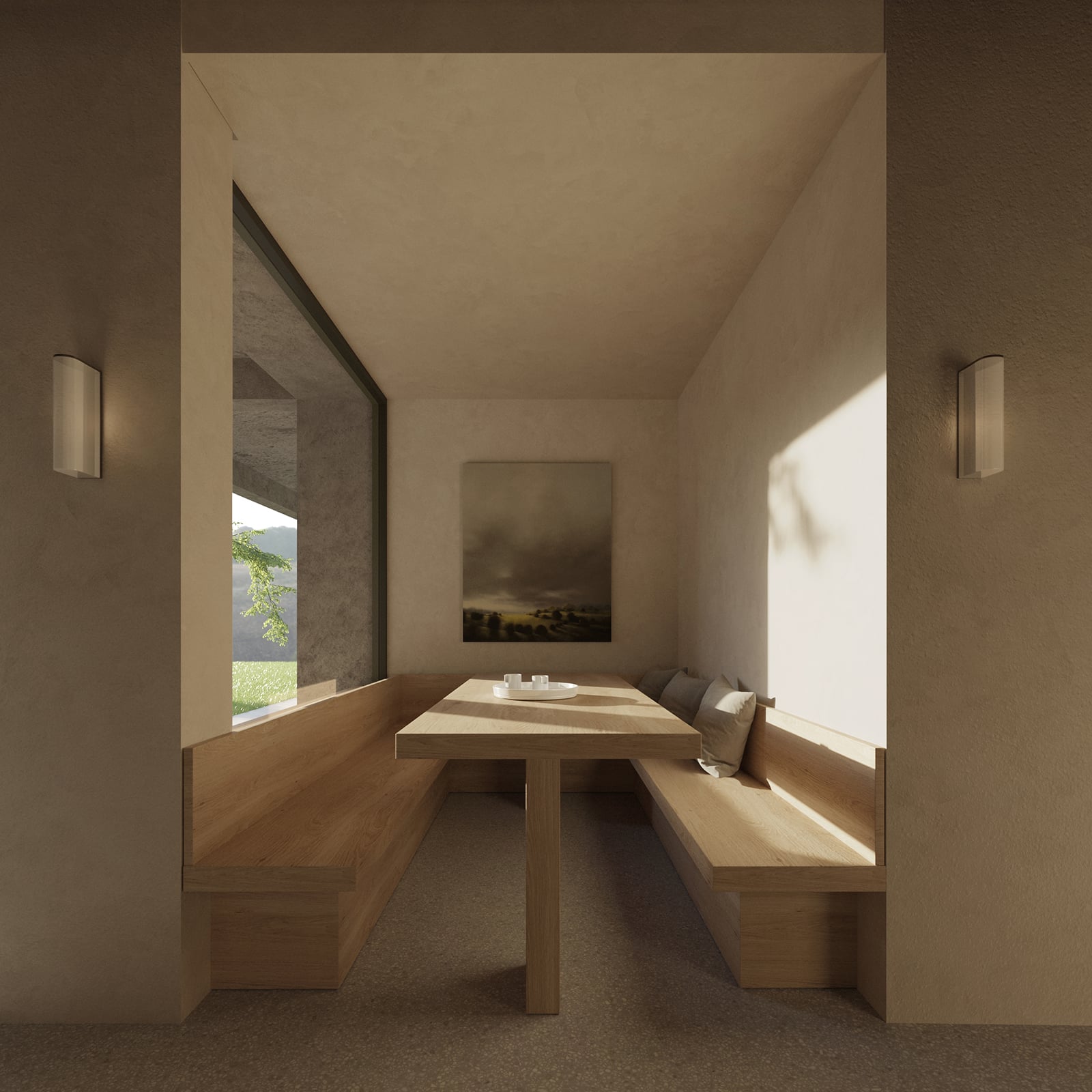
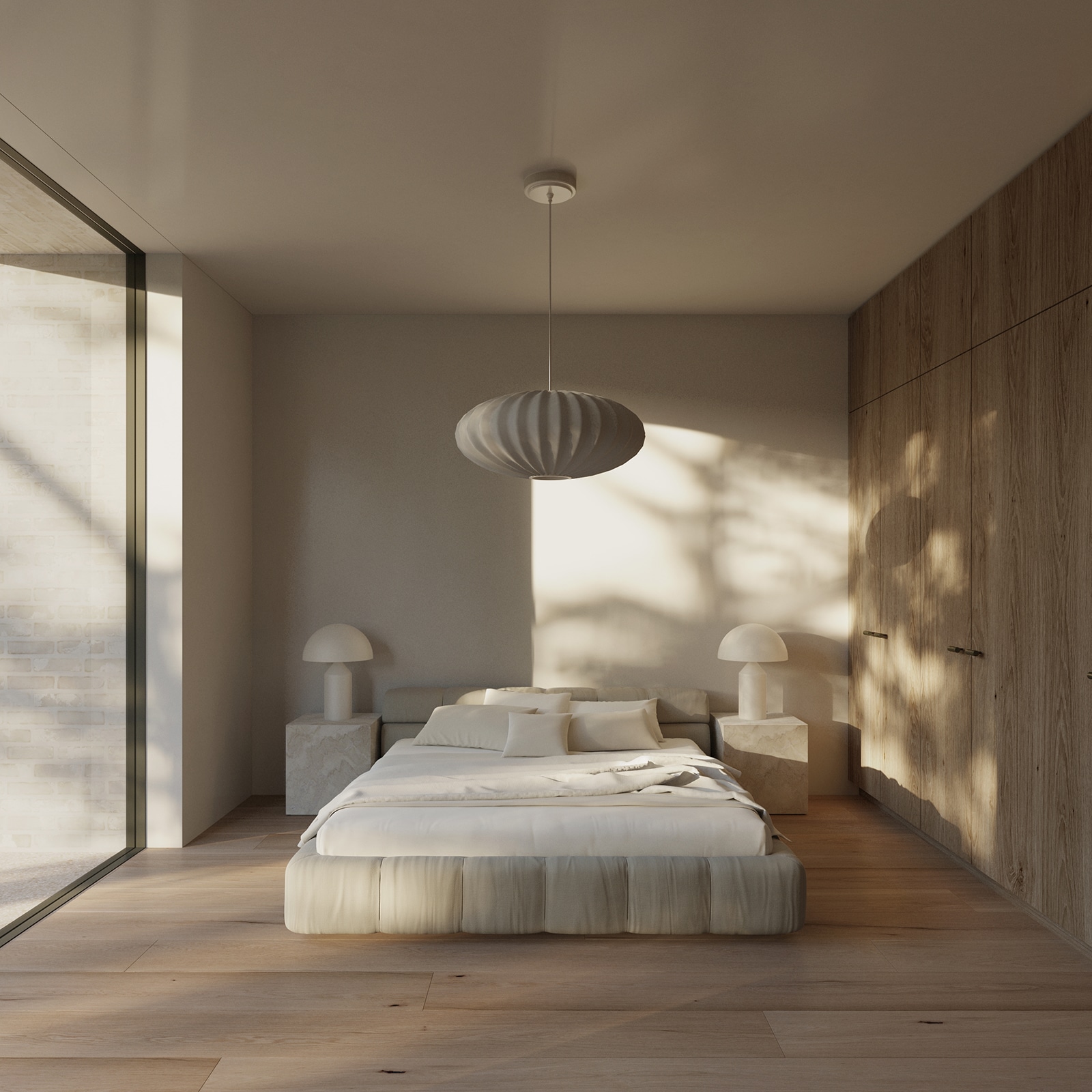
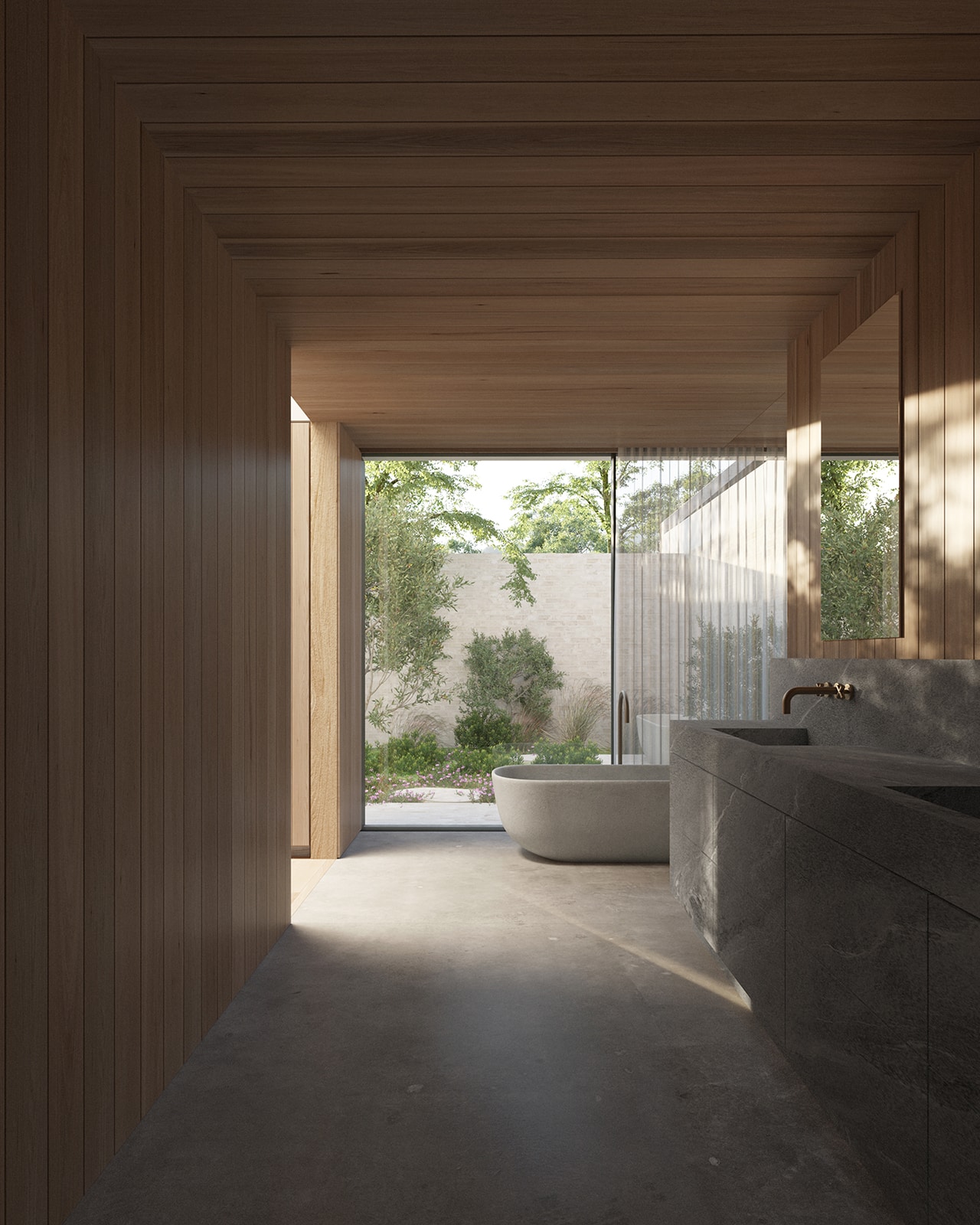
Materially, the house is defined by enduring, robust elements. Pale masonry and concrete form a solid external envelope, paired with a restrained roof form that reinforces the building’s clarity and permanence. Internally, natural timber linings, stone, and concrete introduce warmth and texture, creating a calm and tactile interior environment.
Openings are carefully composed to balance outlook with privacy, drawing light deep into the plan while maintaining a sense of enclosure. Moments of compression and release through corridors, thresholds, and framed views create a measured spatial sequence that enhances the experience of moving through the house.
Belgrave South House is an architecture of continuity and restraint. It is a home grounded in material permanence and spatial clarity, shaped by its landscape and designed for long-term, everyday occupation.